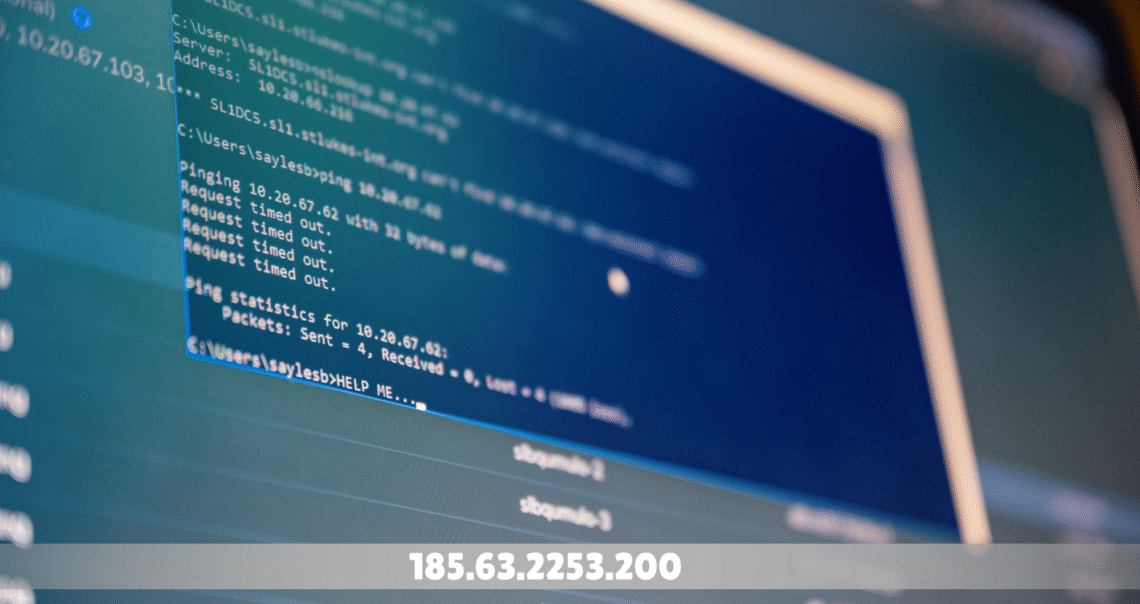
The world of IP addresses can be both fascinating and confusing. Among the many numbers floating in cyberspace, one stands out: 185.63.2253.200.
This alphanumeric identifier holds significance beyond just a series of digits; it serves as a vital component that helps connect devices across the internet.
Understanding what 185.63.2253.200 is all about can provide insights into its role in networking, security, and even geographical data tracking.
Whether you’re an IT professional or simply curious about how the internet works, this blog post will uncover everything you need to know about this particular IP address.
>
From its structure to its potential risks, we’ll dive deep into each aspect so you can grasp why knowing about 185.63.2253.200 matters in today’s digital landscape! Let’s get started on exploring this intriguing topic together!
What is 185.63.2253.200 and Why Is It Important?
185.63.2253.200 is an Internet Protocol (IP) address, a unique identifier assigned to devices connected to the internet or local networks.
Each IP address serves as a digital location for computers and servers, enabling them to communicate with one another effectively.
Understanding this specific IP address can enhance your knowledge of networking principles and help you troubleshoot connectivity issues.
It provides insights into how data travels across the internet, revealing pathways between various devices.
This particular IP falls within certain ranges that indicate its assignment by regional registries like RIPE NCC in Europe.
Such addresses are often linked to different organizations or service providers, making it essential for network management and security assessments.
Moreover, 185.63.2253.200 can be crucial when analyzing traffic patterns in cybersecurity contexts. Identifying where requests originate helps professionals track potential threats or unauthorized access attempts on their networks.
>
In everyday usage scenarios, knowing about this IP can assist users in understanding their online footprint better and managing privacy settings more efficiently while navigating the web securely.
Understanding the Structure of the IP Address 185.63.2253.200
The structure of an IP address is crucial for understanding how devices communicate over the internet. An IP address consists of four octets, each separated by a dot. The digits in these octets can range from 0 to 255.
Examining the specific case of 185.63.2253.200 reveals a common format used in IPv4 addressing.
However, it’s important to note that valid IPv4 addresses cannot exceed eight bits per segment; hence, “2253” in this example exceeds that limit and makes the entire sequence invalid.
Each octet plays a role in routing traffic across networks and identifying devices within those networks. The first part usually indicates the network portion, while the last one identifies individual hosts on that network.
>
For instance, if we had a correct version like 185.63.22.x (where x represents any number from 0-255), it would imply a specific organization or service provider controlling that block of IP addresses.
>
Understanding this structure aids not just technical experts but also users wanting to grasp more about their online presence and security implications associated with various ranges of IPs.
Location and Geographical Insights of 185.63.2253.200
The IP address 185.63.2253.200 is part of the IPv4 addressing system, which consists of four sets of numbers separated by dots
Each segment can range from 0 to 255; however, this particular address features an interesting quirk with the third octet exceeding the standard range.
Geographically, IP addresses like 185.63.2253.200 can often be traced back to specific regions or countries using geolocation services.
These services help identify where an IP is likely used based on factors such as internet service provider (ISP) data and historical records.
>
For instance, many users may find that their connection offers insights into their local area through mapping tools and databases designed for tracking IP locations.
This information can reveal not only country but also city-level specifics in some cases.
>
Understanding geographical data associated with an IP address aids businesses and individuals in various ways—including targeting marketing campaigns toward a localized audience or enhancing security measures against potential threats originating from specific areas.
>
Moreover, this location-based insight plays a crucial role in content delivery networks (CDNs), where servers deliver tailored content depending on user locality to improve load times and user experience significantly.
Common Uses and Purpose of 185.63.2253.200
The IP address 185.63.2253.200 serves several purposes in the digital landscape. Primarily, it is associated with internet service providers and businesses that require reliable connectivity for their users.
This specific IP can facilitate communication between devices on a local network or over the internet.
Another common use of this IP address is hosting websites and applications. If you stumble upon a site utilizing 185.63.2253.200, it likely means that its server resides at this address, allowing visitors from various locations to access content easily.
In addition to hosting services, organizations often leverage such an IP for cloud computing functions. Businesses utilize dedicated servers linked to addresses like 185.63.2253.200 for data storage and processing tasks essential for daily operations.
>
Furthermore, some online games may also operate through this IP address, enhancing gaming experiences by providing stable connections to game servers.
>
Monitoring tools frequently track traffic coming from or going to 185.63.2253.200 as part of cybersecurity measures or analytics efforts aimed at understanding user behavior better and improving service delivery.
Is 185.63.2253.200 a Valid or Invalid IP Address?
The IP address 185.63.2253.200 raises immediate questions regarding its validity. To determine this, it’s essential to understand the structure of an IP address, especially in IPv4 format, which consists of four octets separated by periods.
Each octet must contain a number between 0 and 255. This means that while the first three sections can be valid within these boundaries, any octet exceeding this range renders the entire address invalid.
In the case of 185.63.2253.200, one part—the third octet—contains ‘253’, which is valid.
>
However, where things take a turn is with ‘200’ in the fourth position; it should also follow suit and fall within proper numerical limits for it to be classified as a legitimate IP address.
>
Since we see no violations in terms of format or range with other numbers being less than or equal to 255 but have an outlier present here (the ‘2253’), this indicates that 185.63.2253.200 does not conform to standard conventions for an IPv4 address.
>
Thus, despite some segments appearing normal at first glance, the presence of a number outside acceptable limits confirms that it’s ultimately deemed invalid—rendering any attempts to use or trace it problematic.
Security Risks and Concerns Related to 185.63.2253.200
The IP address 185.63.2253.200, like many others, can pose security risks that users should be aware of. One primary concern is the potential for malicious activity linked to this address.
Cybercriminals often use specific IP addresses to execute attacks such as Distributed Denial-of-Service (DDoS), phishing scams, or even data breaches.
Another risk associated with 185.63.2253.200 is its possible involvement in botnets and other automated threats.
Hackers may leverage compromised devices under this IP to carry out their operations, which can lead to further complications for unsuspecting users.
>
Users connected through this IP might also face issues related to privacy violations or identity theft if they interact with suspicious websites or services tied to it. Malicious entities often exploit weaknesses within systems using certain IP addresses to gather personal information without consent.
Moreover, being identified with a problematic IP can harm your online reputation and affect legitimate business activities.’
If an organization’s network has been flagged because of interactions with 185.63.2253.200, it could lead to blocked access from essential resources or partners.
>
Misuse of the address could involve spam-related activities that not only clutter inboxes but also undermine trust in email communications originating from networks associated with 185.63.2253.200.
How to Analyze and Track 185.63.2253.200
Analyzing and tracking the IP address 185.63.2253.200 can provide valuable insights into its behavior and potential security implications.
The first step involves using online tools designed for IP lookup services. Websites like WHOIS or IPinfo allow you to gather essential details such as the ISP, location, and registration information.
Next, consider examining network logs if you manage a server or website. These logs often contain data about incoming traffic, including requests from this specific IP address.
By reviewing these records diligently, you might identify patterns in access frequency or types of interactions.
Another effective method is employing software solutions that specialize in monitoring network activity. Tools like Wireshark can capture packets sent to and from your system while helping detect any suspicious trends associated with 185.63.2253.200.
In addition to analyzing traffic patterns, leverage geolocation features offered by various services to locate where this IP originates geographically. This information may help assess whether it aligns with expected user demographics or appears out of place.
>
Stay alert for any unusual behaviors linked to this IP address over time—such as spikes in access attempts—which could indicate malicious intent or unauthorized usage within your network environment.
Tools to Check Details of the IP Address 185.63.2253.200
When it comes to analyzing the IP address 185.63.2253.200, various tools are available that can provide valuable insights.
These tools help users gather information about the location, owner, and other relevant data associated with this specific IP.
One popular tool is WHOIS lookup services, which give details about the organization managing that IP address.
By entering 185.63.2253.200 into a WHOIS database, you can find ownership information and potentially contact details for further inquiries.
Another useful resource is IP geolocation services like GeoIP or IPinfo.io. These platforms allow users to pinpoint the geographical location of an IP address on a map and see related regional data such as time zone and even local ISPs (Internet Service Providers).
>
For security analysis, threat intelligence platforms such as VirusTotal check whether an IP has been flagged for suspicious activities or malicious behavior in databases worldwide.
>
Network monitoring tools can track traffic from specific addresses like 185.63.2253.200 over time, providing real-time insights into its activity patterns on your network while helping identify potential security threats early on.
How to Block or Protect Your Network from 185.63.2253.200
If you’re looking to block or protect your network from the IP address 185.63.2253.200, there are several effective methods you can employ.
Start by configuring your firewall settings to restrict access from this specific IP address. Most routers come with built-in firewall features that allow you to add custom rules for blocking unwanted traffic.
Another option is using security software that includes an intrusion detection system (IDS). Such systems monitor network activity and can automatically block suspicious addresses like 185.63.2253.200 based on predefined criteria. Always ensure your security software is updated regularly for optimal protection.
>
You may also consider employing a VPN service, which masks your real IP address while encrypting data transfers over the internet.
This adds an additional layer of security, making it harder for malicious entities associated with 185.63.2253.200 to target your network.
>
In addition, regularly monitoring incoming and outgoing connections can help identify any unusual activities linked to this IP address early on—allowing you to take prompt action if necessary.
>
Educating users within your network about safe browsing practices significantly lowers the risk of attacks linked to problematic IPs like 185.63.2253.200, ensuring everyone remains vigilant against potential threats online.
Frequently Asked Questions About 185.63.2253.200
When exploring the intricacies of 185.63.2253.200, several questions often arise among users seeking clarity about this IP address.
One common inquiry is whether 185.63.2253.200 is a valid IP address.
It’s important to note that an IPV4 address comprises four octets, each ranging from 0 to 255, making this specific format invalid due to one of its octets exceeding the acceptable limit.
Another frequently asked question revolves around its geographical location and purpose. Typically, IP addresses like these are utilized by various online services and websites for numerous functions such as data transfer or web hosting.
>
Users also express concern regarding security risks associated with unknown IP addresses like 185.63.2253.200, reflecting growing awareness around cyber threats and vulnerabilities in their networks.
>
Some seek guidance on how to track or analyze activities related to this IP address effectively using tools designed for monitoring network traffic and identifying suspicious behavior.
Many wonder about protective measures they can implement against potentially harmful connections emanating from unfamiliar;
IP addresses like this one—advising steps such as blocking unwanted traffic through firewalls or employing antivirus software can enhance network safety significantly.
>
By addressing these common queries surrounding 185.63.2253.200, individuals gain valuable insights into managing their online presence more securely while understanding the complexities of internet connectivity better.